 by
by A beautiful garden can be a source of immense joy and a peaceful escape from the stresses of daily life. The problem is, many people associate a stunning garden with endless hours of back-breaking work: constant weeding, watering, and pruning. It does not have to be this way.
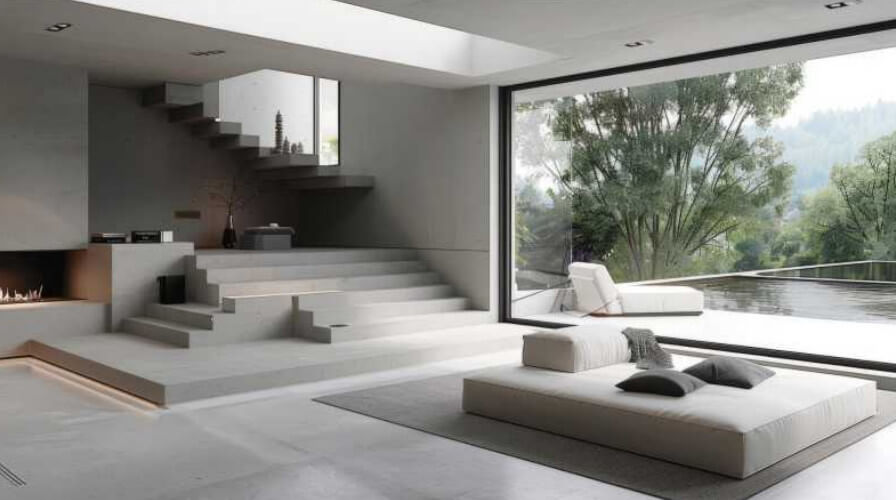
The secret to a gorgeous yard that does not consume your weekends is smart design. A low-maintenance garden is not a “no-maintenance” garden, but it is a thoughtfully planned space that works with nature, not against it.
This guide will walk you through the essential principles and practical steps to create a thriving, beautiful garden that gives you more time to relax and enjoy it.
The Foundation: Right Plant, Right Place
This is the golden rule of low-maintenance gardening. Fighting to keep a shade-loving plant alive in blistering sun is a recipe for frustration. Before you buy a single plant, you must understand your yard’s unique conditions.
-
Observe Your Sunlight: Track how much direct sun different parts of your yard get throughout the day. “Full sun” means 6+ hours, “part sun/shade” is 3-6 hours, and “full shade” is less than 3 hours.
-
Know Your Soil: Is your soil sandy and fast-draining, or heavy clay that holds moisture? Most local university extension offices offer simple soil testing kits.
-
Understand Your Climate Zone: Know your USDA Plant Hardiness Zone. This ensures you choose plants that can survive your region’s winter temperatures. You can easily find your zone on the USDA Plant Hardiness Zone Map.
Choosing plants that are naturally suited to your specific environment is the single most important step. They will require less water, less fertilizer, and less fuss.
Embrace Hardy, Native Plants
Native plants are the superstars of the low-maintenance garden. These are plants that have evolved in your specific region for centuries.
Why They Are a Smart Choice:
-
Drought-Tolerant: Once established, they are adapted to your local rainfall patterns and require far less supplemental watering.
-
Pest and Disease Resistant: They have natural defenses against local pests and diseases, meaning you will spend less time and money on treatments.
-
Support Local Wildlife: They provide essential food and habitat for local birds, bees, and butterflies, creating a vibrant, living ecosystem.
Choose Perennials Over Annuals
Annuals are plants that complete their life cycle in one year. They provide a big splash of color but must be replanted every single spring. Perennials are plants that come back year after year.
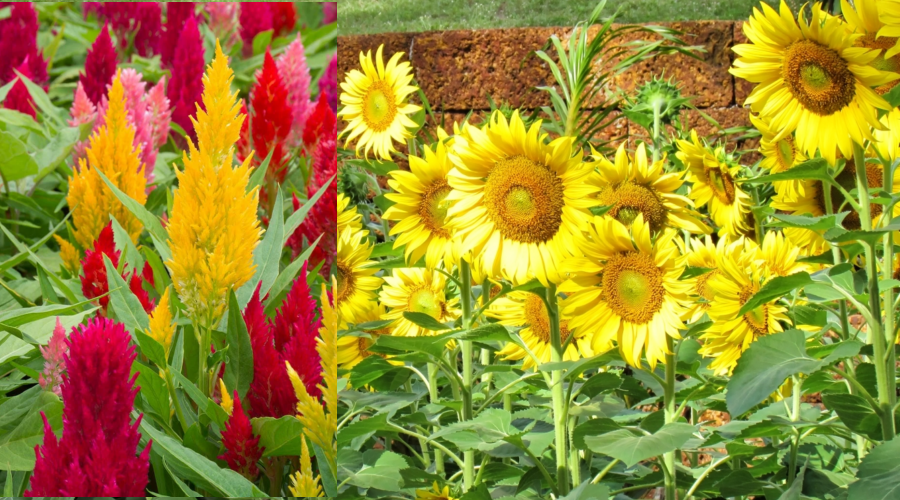
While you might get fewer flowers at once from a perennial, the long-term benefit is huge. Planting a garden bed with beautiful, long-living perennials like Coneflowers, Hostas, Sedum, and ornamental grasses means you do the work once, and they reward you for years to come.
The Power of Mulch
Mulch is a low-maintenance gardener’s best friend. Applying a two-to-three-inch layer of organic mulch (like shredded bark or wood chips) over your garden beds has three incredible benefits.
-
It Suppresses Weeds: A thick layer of mulch blocks sunlight, preventing most weed seeds from germinating. This drastically cuts down on weeding time.
-
It Retains Moisture: Mulch acts like a sponge, soaking up water and slowly releasing it to the plant roots. This means you will need to water far less often.
-
It Improves Soil Health: As organic mulch breaks down, it enriches the soil with valuable nutrients, reducing the need for fertilizer.
Think in Groups and Masses
Instead of planting one of this and one of that, plant in groups or masses of three, five, or seven of the same plant. This creates a bold, intentional design that looks lush and full. A large drift of a single type of ornamental grass has a much greater visual impact and is easier to care for than a dozen different individual plants. This technique also helps to choke out weeds within the planting area.
Go “Lawn-Free” (or at Least “Lawn-Less”)
The single most high-maintenance element in most yards is the traditional grass lawn. It requires constant mowing, watering, fertilizing, and weeding. One of the best ways to reduce your workload is to reduce the size of your lawn.
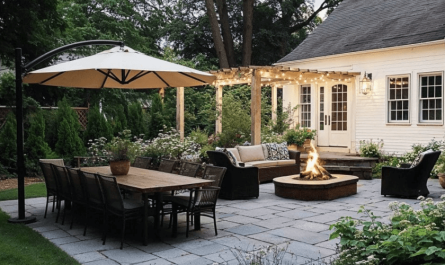
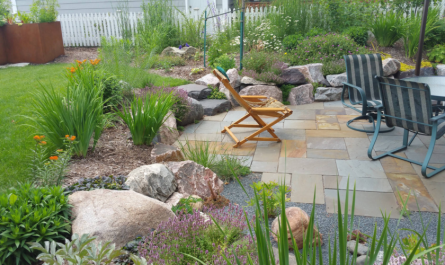
Replace sections of grass with expanded garden beds filled with low-maintenance perennials and shrubs. Consider attractive, walkable ground covers like Creeping Thyme or create a beautiful patio space for outdoor living. This strategy is also a key component of creating a more valuable property. For more on this, check out [Our Guide to Landscape Ideas That Boost Property Value](your-internal-link-here).
Install a Drip Irrigation System
While it requires an initial investment of time and money, a drip irrigation or soaker hose system is a game-changer for a low-maintenance garden. These systems deliver water slowly and directly to the plant roots, where it is needed most. This is far more efficient than a traditional sprinkler, reducing water waste by up to 50% and preventing fungal diseases that can be caused by wet leaves.
Conclusion: Work Smarter, Not Harder
Creating a garden that thrives all year with less work is not about finding magical, no-care plants. It is about creating a smart, resilient ecosystem. By choosing the right plants for your space, leveraging the power of mulch, and designing with intention, you can build a stunning outdoor oasis that gives back more than it takes.
Let your garden be a source of relaxation, not a list of chores.
You can also read HERE about more this article.